
If it’s important to the people we support, then it’s important to us. That’s why our Partners in Communication team (PiC) have been working with individuals we support ahead of the Scottish Parliament elections on 6th May.

Tina Yu from PiC says: “Sense Scotland and a number of other partners organised a hustings event and I supported four individuals who were keen to be involved. All of them were referred to me by Sense Scotland’s Family Advisory Service. Three of the people supported wanted to attend the event, whilst another, Craig, wanted to ask a question about transport – specifically about how disjointed the transport system is, and what can be done to change this.
“Attending the online meeting was not an option for Craig – the technicalities of getting online were challenging and the noise and visual busyness of a Zoom call too stressful.”
Tina submitted Craig’s question to the panel to be read out and will feed back the answers to him soon. But how do people like Tina essentially work as intermediaries, without ‘varying the message’ or inadvertently bringing their own thoughts in to the mix?
She explains: “I’m representing Sense Scotland, so it’s important I gather the views of people we support and refrain from ‘interpreting’ what I think they mean. We use various methods to gather their thoughts on issues depending on the individual. Sometimes it’s a conversation, signing, whatever is best.”
In response to Craig’s questions at the hustings all the candidates agreed that the transport system is flawed. Tina will feedback in more detail to Craig next week – and this is where holding accessible online meetings have been a bonus…
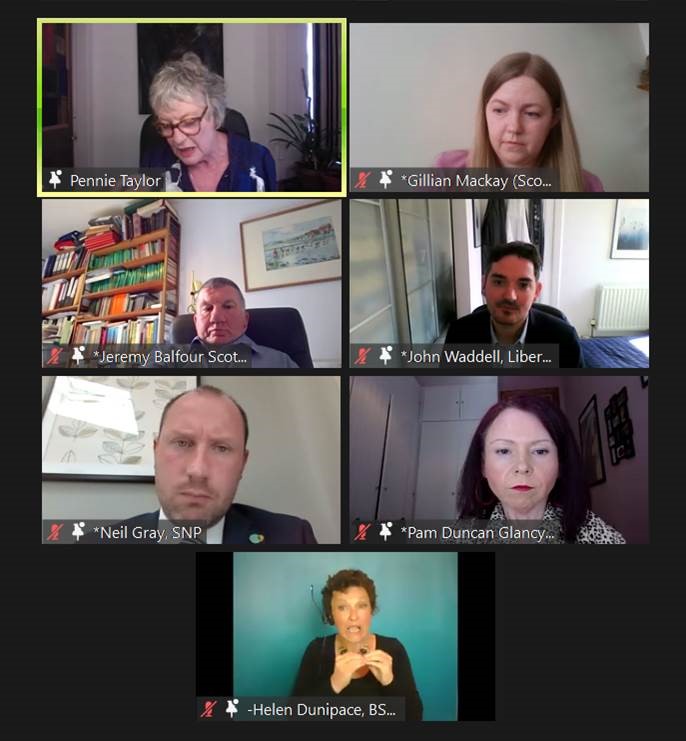
“We organised this event to cater for a number of needs so there will be a full transcript and I can read out word for word what the various responses were to his question,” says Tina. “Also the video is going up on Youtube so he can listen to that himself as well. That should help any unconscious bias on my part.”
Because Craig is interested in transport issues Tina has also signed up to various consultation forums and groups, so that she can support Craig to attend these, or submit questions and relay responses on his behalf. The two are also gearing up for some reading up of the party manifestos, an area which has needed a lot of work.
The Electoral Commission’s report Elections for Everyone published after the UK Parliamentary election in 2017 found that many disabled people wanted parties to publish their manifestos in accessible formats at the same time as the main version. Alternative formats were only produced – if at all – many days after their launch. This made people feel rushed into making decisions.
PiC have been gathering accessible formats of party manifestos, so the different formats can be shared with the people we support. This piece of work – with our partners at Disability Equality Scotland (DES) – is available on the Scottish Inclusive Communication Hub website.
“At PiC we are working with DES to gather and compare the five main party manifestos in terms of their accessibility,” Tina continues, “can they be accessed in braille? Can voters receive these in audio format? Have they considered the needs of disabled people, who make up around one in five of the population?
“People we support also talk about the issues of actually getting to the polling station. Transport is an issue, but so is accessing the buildings. If people can’t physically get out to vote then we remind and support them to do postal votes or – the only option left at this stage – voting by proxy.”
Craig isn’t the only person that Tina and the rest of the team have been involved with regarding the election. In Dundee Gillian was supported to get online to attend the hustings – the first time she’d been on an online meeting. Her thoughts: “It was very fast paced and I found it hard to follow at times, but I really enjoyed the event.”
Whoever they decide to vote for, if they decide to vote, helping disabled people have a voice in important issues is all part of the day job for the PiC team.