

Here at Sense Scotland, we take an inclusive approach to all we do, putting the people we support at the heart of our work and directly supporting their needs. Over seven thousand miles away, our work with local partners in Malawi takes exactly the same approach with children and young people. It’s all about inclusion.
As we start our fourth year of our four-and-a-half year project, funded by the Scottish Government, we’ve been identifying children with additional needs and supporting them to gain equal access to learning in their own communities. This gives them a future of their own choosing that only a formal education can bring (as well as the fun that school offers, making friends and playtime).
This community-empowered project addresses ingrained and often inherited negative attitudes towards disability. We offer training to the children, their parents, brothers and sisters, teachers, school managers and community leaders to understand the rights of all children to an education and enable them to reach their potential regardless of any additional needs. So far we’ve reached nearly 4000 children.

For one pupil, Lameck, this inclusive approach has changed his life.
At a young age he contracted meningitis, which affected his ability to walk unaided. This grew worse and he struggled at school and home due to problems of access and a lack of understanding about his right to an education.
Then his father attended one of our training sessions which advocates for positive attitudes towards disabled learners. He also joined the parent support group, which offers support and income generating activities. With a greater understanding of the power of education, he is now very proactive in supporting Lameck, taking him to school and ensuring he has support at home.
Lameck told us: “I am thankful to my father who is always supporting me, we are a family of seven children but he treats us equally and encourages me to attend school.”
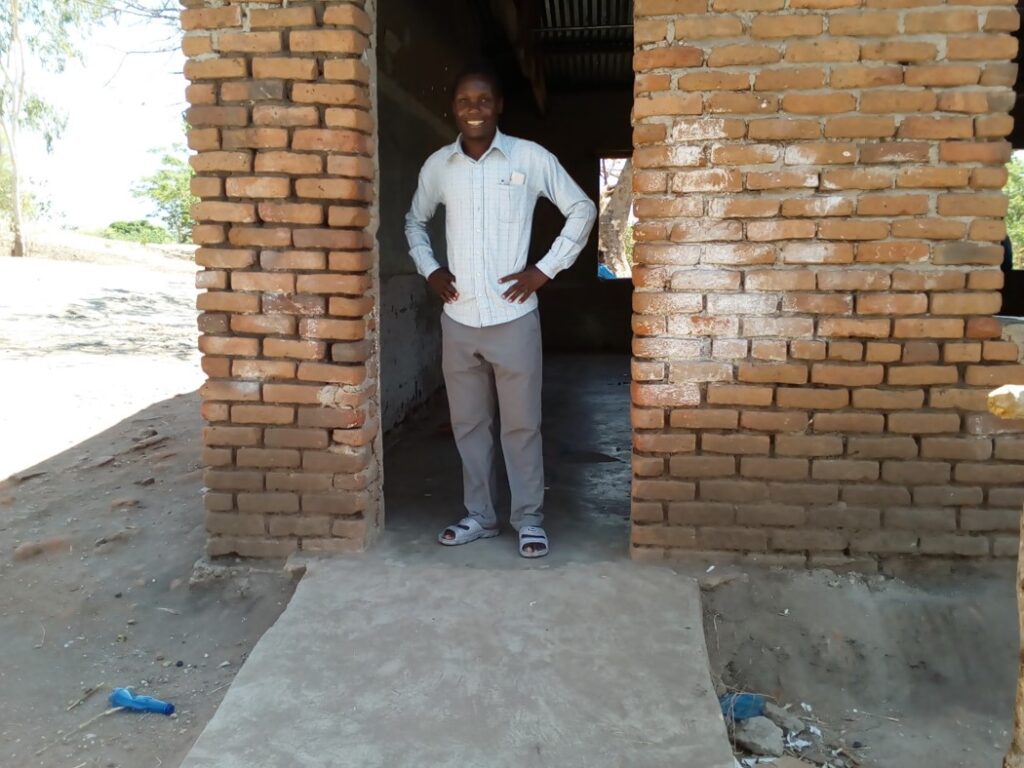
Teachers and community leaders in his village of Kasangamala also attended training sessions and together, supported Lameck to thrive at school.
The teachers ensured that pupils understood the meaning of inclusive education and this is bourne out in practice. Lameck now has two good friends, Leah and Esau, who support him to and from home.
Leah told us: “Inclusive education is good because it teaches us to stay together in class with friends, we live in harmony …. and encourage each other.”
Mr Gondwe, the Deputy Head Teacher, told us: “After lessons from our trainings, and noting that we had a learner using a wheelchair, we organised ourselves and to build the ramps around our school. We bought two bags of cement which costed about £14 and paid £5 for labour. The community members supplied bricks, sand and cooked food for the builder.”

For Lameck this approach to helping him attend school and get a good education is working. Having repeated one class year due to missing school and poor grades, he has now passed his exams for the last two years and his class teachers report that his performance has improved greatly.
Thousands of other children like Lameck are now enjoying school, making friends and benefiting from an inclusive approach to community living.
What a difference this is making now and for their future. I can’t wait to see what happens next.