

By Karen Goodman-Jones, Malawi Project Co-ordinator
Putting a child with additional needs and their family at the heart of our work is what we do at Sense Scotland. In Malawi however, support for basic rights and services are difficult to come by, which is where our international project is having an impact – despite the additional challenge of the global pandemic.
We identify children with additional needs and support them to access an education in their own communities. To do this we work with their families, their brothers and sisters, teachers, respected community leaders and other pupils. We challenge negative attitudes towards disability and foster an understanding of inclusion; at home, at school and in their community.
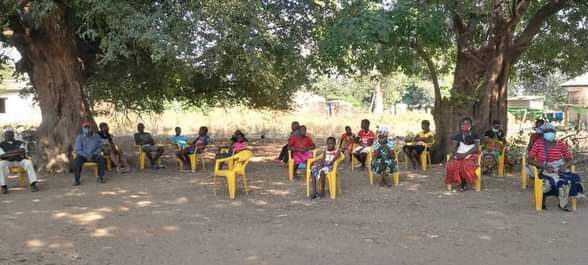
We offer training to families and the children themselves to understand their right to an education. We have helped to set up 493 parent support groups with nearly 3000 members to provide mutual support and to drive income-generating opportunities including craft making and other local activities.
Three years in to our four-and-a-half year project, which is funded by the Scottish Government, we can see the impact we’re having. Although only established in February this year, one group with 25 members in Mlare, Northern Malawi, are now one of the most active. With monthly contributions (around £1 per member) they provide monthly loans to others. Thanks to these, most of the group have now set up small scale businesses.
As all schools are closed by the Coronavirus pandemic, they were keen to support learners with additional needs to have access to lessons. Following discussions with the local Ministry of Education, and using the group’s savings, they provided PPE and paid for the transport costs of a local specialist teacher to come to Mlare School and provide lessons outdoors to the school’s 44 children with special needs.
Their chairman explained what prompted this action: “Due to the pandemic, a number of learners – mainly girls – have dropped out of school. Some of them have married while others are pregnant. The situation is starting to scare us as we know that children with disabilities are more vulnerable, and we saw the high risk of drop-outs among learners with disabilities, mainly girls.”
He went on to say they “wanted to help learners with disabilities have access to lessons” despite the crisis.
With schools continuing to remain closed for all but examination year pupils, this initiative was praised by the District Education Manager and our project team were encouraged to support other Parent Support Groups to emulate these actions in other areas.
As the pandemic lingers it means limited travel. But, like everyone else, we’re learning to keep in touch in different ways as we adapt to the ‘new normal’. For the meantime, the learning – and the impactful project work – continues.