

This article features in the summer 2023 issue of Touching Base, our quarterly newsletter for professionals in the health and social care sector. If you would like to sign up for this newsletter, use the form at the bottom of this page.
In the first edition of Touching Base, we outlined some of the main practice areas that we focus on at Sense Scotland and we promised to provide more detail in subsequent issues. You will recall that one of our principal practice topics was understanding how people experience the world around them. So, to coincide with this year’s Deafblind Awareness Week from 26 June to 2 July, we thought we would use this issue to highlight some of the projects and networks focused on deafblindness that we are involved with.
What is Deafblind Awareness Week?
Deafblind Awareness Week is always around this time of year, straddling the birthday of the late Helen Keller on 27 June. It’s a time when we celebrate the achievements of all people who are deafblind and raise awareness of deafblindness. Helen Keller is probably the most well-known person with deafblindness, and during her lifetime she became a celebrity around the world. She visited Scotland in 1932, and on that occasion, a prize bullock was auctioned in Inverness, with the money raised donated to be used for the benefit of people who are deafblind.
Sense Scotland and Deafblindness
In 1989, the remaining pot of money was passed to Sense Scotland, who instigated the Hellen Keller International Award – an art competition inviting pieces in any medium on the subject of deafblindness. Sense Scotland were entrusted with managing this pot because we began as a small group of families pressing for services for their children who were affected by deafblindness, many because of congenital rubella syndrome.
We grew to become a specialised social care provider supporting people with communication support needs associated with complex and sensory disabilities, and their families, where individual needs and choices come first, and we still offer support to people who have congenital deafblindness.
Working with Others on Deafblindness
Supporting people with congenital deafblindness is a relatively small field in Scotland. That is why it makes sense to work with other organisations around the world with whom we can share and learn. We learn from people who are deafblind, the people who support them and the researchers who are interested in best practices for professionals in the field.
What is deafblindness? Colleagues in Sweden have recently produced a short film about deafblindness, in accordance with the Nordic definition, which you can watch here. A version with audio description can be found here.
International Networks
Nordic Cognition Network
The Nordic Network on Cognition in Relation to Congenital Deafblindness, or Nordic Cognition Network for short, was established in 2008. The network focuses on individuals with congenital deafblindness as well as on those with acquired deafblindness and potential cognitive impairment. The main purpose of the network is to increase professional competence in order to understand cognitive development, identify cognition, and recognise the relationship to learning and functioning in everyday life in people with congenital deafblindness.
The Nordic countries are Denmark, Sweden, Norway, Finland and Iceland. You will have noticed that Scotland isn’t a Nordic country, but we have been invited to participate in this network as a sort of ‘Nordic-adjacent country’. We have two Sense Scotland staff who are members of this group and regularly attend meetings and contribute to webinars and publications. In 2018, Sense Scotland hosted the Nordic Cognition Network at TouchBase Glasgow, where the network shared its expertise on cognition with colleagues working in Scotland supporting people who are deafblind.
Tactile Working Memory Scale (TWMS) Supervisors Network
Colleagues in Norway and The Netherlands developed the Tactile Working Memory Scale and produced a manual for its use. This manual gives professionals tools to identify and assess tactile working memory in persons with deafblindness.
Working memory, or the ability to keep something in mind for a limited amount of time and use that information, is a central function in cognition. It is also key to how all of us communicate, as working memory is intricately linked with communication. For persons with congenital deafblindness, we need a bodily-tactile perspective on working memory. In the bodily-tactile modality, body postures, body movements, manual gestures, and touch patterns can have various communicative meanings. Paul Hart, our Head of Operational Support, Practice Development and Quality, made a video with Texas School for the Blind and Visually Impaired called Valuing Tactile Body Communication can be found here, giving more information on this mode of communication.
The TWMS manual gives a theoretical overview and presents a scale that can be used by professionals to identify and assess tactile working memory in persons with deafblindness, and design tools and strategies to ensure that these persons can develop and make use of all their potential, both cognitively and linguistically.
One person within Sense Scotland has been trained to use this scale and has completed additional training in 2021 to become a Tactile Working Memory Scale Supervisor to support others to use the scale. There is now also a TWMS Supervisors Network which meets online or in-person and supports the supervisors from all around the world. The supervisors in the UK and Ireland have also formed a group which meets online to develop the use of the TWMS in this country. The real strength of this approach is the development of strategies that staff teams can implement to support deafblind people to achieve their full potential.
Nordic Welfare Centre
Both networks above are supported by The Nordic Welfare Centre (NWC). The deafblind field at the NWC supports equal opportunities and participation in society for people with combined vision and hearing impairment and deafblindness. As well as publishing the TWMS manual, they have published other interesting and useful books, in English, on different aspects of deafblindness.
One of these books, ‘Revealing Hidden Potentials – Assessing Cognition in Individuals with Congenital Deafblindness’ features a chapter with contributions from Sense Scotland staff members. A presentation based on this chapter can be watched on YouTube. This book presents varying assessment purposes, procedures and analytic approaches for professionals who are involved in making examinations and assessments of cognition in both children and adults who are deafblind. We know that people with congenital deafblindness often have hidden cognitive potential that those around them fail to detect. This can lead to missing out on communication, or not even having the opportunity to develop a tactile language. An informed assessment of cognition may reveal latent abilities and with suitable strategies the person with congenital deafblindness can develop their full potential. All the NWC’s publications in relation to deafblindness are available to download for free here.
Deafblind International (DbI)
We are also connected with Deafblind International (DbI), which is a worldwide umbrella organisation that brings together people who are deafblind, families and professionals. Over the years we have spoken at their conferences, contributed to various committees and networks, written articles and publications and participated in research projects. One of these networks is the Outdoor Network.
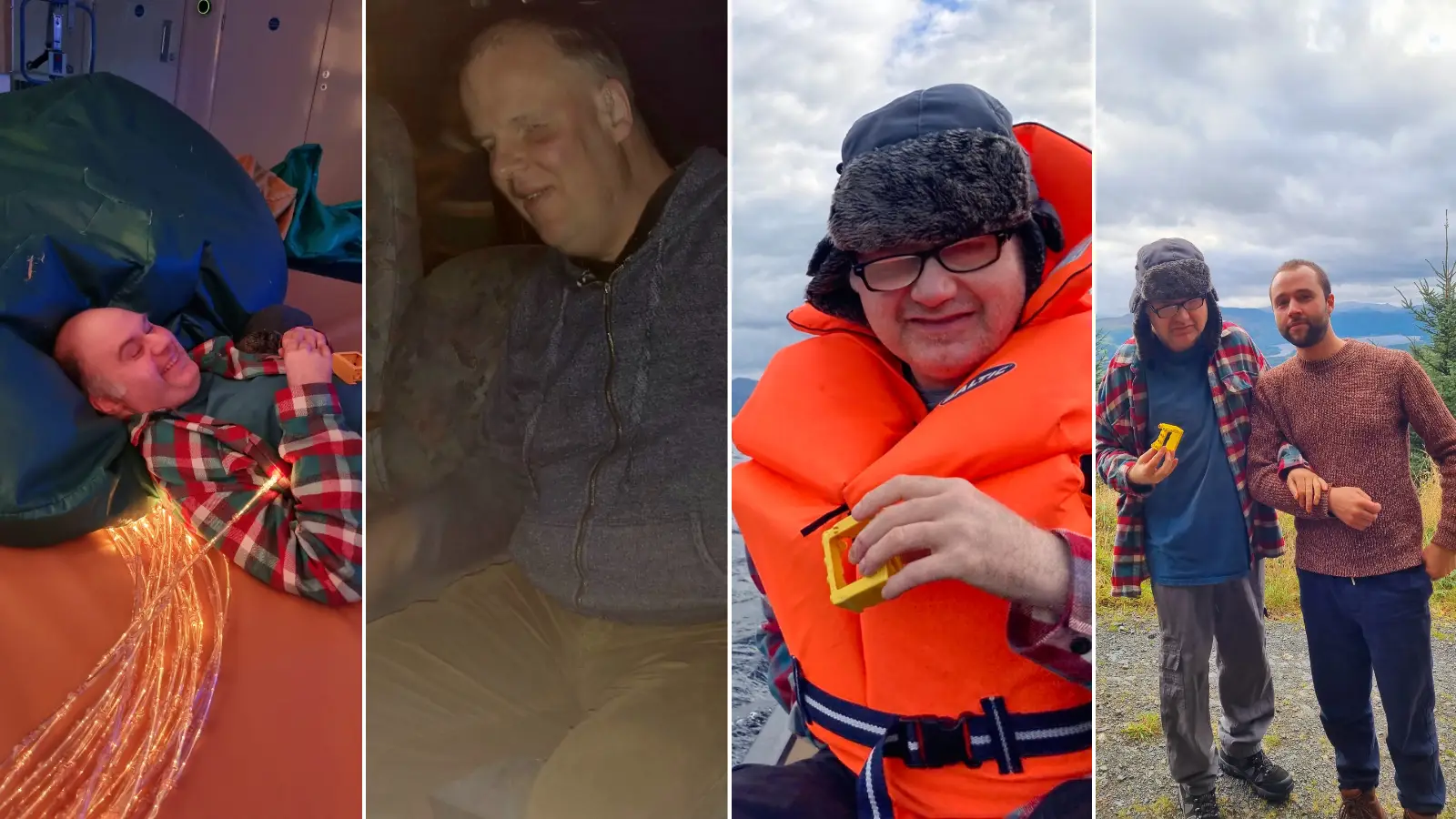
The DbI Outdoor Network is for all people who enjoy or use the outdoor environment. It is open to people whose deafblindness is either acquired or congenital as well as to families, support staff and interested professionals. The network encourages people who are deafblind and the people who support them to use and enjoy the outdoor environment. Members of the network have been meeting on an annual basis since 2012 to share experiences of activities. This network was initially established by Joe Gibson, who was for a long time employed by Sense Scotland. He was drawn to the mountains and fjords of Norway and now teaches in Norway’s specialist school for children who are deafblind – so we are still able to pick his brains and learn from his experience! We are also able to remain fully involved with the DbI outdoor network. People we support and their support staff have participated in these events over the years, made lasting friendships, and explored the outdoors together. Plans are well underway for this year’s event in The Netherlands, where some of the people we support will meet up with old friends and share some more outdoor adventures. If you would like more information on the Deafblind International Outdoor Network, please contact deafblindoutdoors@gmail.com.
Other networks we have been members of include:
- The Tactile Communication Network (who developed a film about the richness of the tactile world, the Landscape of Touch. This was a collaboration between four countries (USA, Norway, Netherlands and Scotland) and is still a much-used film in our training courses, and is used by colleagues across the world – if you would like access to this film, please get in touch).
- The Communication Network (which has published four booklets that outline the development of communication for people born deafblind). Members of this group, including a Sense Scotland staff member, are soon to publish a chapter in an upcoming Oxford University Press book entitled ‘Communication with People who are Deafblind: Assessment and Intervention’.
As well as overseeing these networks, Deafblind International publishes the DbI Review magazine. The magazine includes articles, interviews, news and updates from the networks. It is published twice a year – in late April and late October – and is free to read.
Learning
Continuous Professional Development
Within Sense Scotland, we have a dedicated Learning and Development Team, who develop and deliver training to staff and support facilitators from other teams to deliver specialised training courses. These courses are informed and influenced by our learning through our links with colleagues around the world. Currently, an updated programme of Continuous Professional Development (CPD) is being rolled out which has as its focus how people experience the world around us. CPD courses cover Sensory Awareness, Sensory Processing and Understanding Deafblindness as well as how to support people to get the most out of all their senses.
Recently we were able to run an experiential course on sensory awareness for a staff team for the first time since COVID-19 restrictions were lifted. This saw support staff reading emotions through touch, blowing bubbles and using weighted blankets, and making and eating a snack while blindfolded.
Blowing Bubbles
This exercise is designed to give participants the opportunity to experience the activation of their proprioceptive sense and focus on the difference that makes to how their body feels. Proprioception is a sense that many people have never heard of. ‘Feeling’ where all our body parts are in relation to each other without actually having to touch them or see them is an ability that we get from our proprioceptive sense. In the field of deafblindness, we have traditionally focused on the senses of vision and hearing and on strategies for supporting the use of any residual function that may be present in both of these distance senses. Of course, this is vitally important, and our CPD courses offer the opportunity for support staff to become equipped to do this. However, the other sensory systems – the taste, smell, proprioceptive, and vestibular senses – together provide the essential foundation upon which all of our higher vision, hearing, and touch skills are based.
Proprioceptive sense is found in our body’s joints, muscles and ligaments. It is activated when these parts are being stretched and compressed. The act of blowing bubbles stretches the muscles of the face. This movement stimulates the proprioceptive sense, which is calming and grounding for the body. It can counteract the sensation of our own body ‘floating away’. As part of this training, people are asked to note the difference these grounding activities have on the way they feel and think about how activities like these relate to the people they support. Ever had a really thick milkshake where you had to work really hard to suck with the straw and which made your cheeks ache? This also activates your proprioceptive system. Simple things like the weight of wheat bags which are designed for neck pain relief can also do that, as well as eating crunchy food such as crackers and crisps.
Space Hoppers
Closely related to this is the vestibular system. This is the sense that tells us about the position of our heads in relation to the pull of gravity; it tells us which way is ‘up’, and it detects motion. As a consequence of this, it monitors and directs muscular activity and body position to maintain secure and functional postures whatever we are doing, working very closely with the touch and proprioceptive senses.
When someone has an underdeveloped vestibular system, their brain is not getting the correct information from their eyes, ears, the sense of gravity or movement in their bodies. This in turn makes their brain and body feel unsafe. When they do not feel safe, their arousal level, attention, and survival mode responses kick in. You can’t pay attention to anything else if you don’t feel safe – it’s as simple as that. Vestibular processing can be improved by different movements, e.g. jumping, swinging or spinning. Jumping on a space hopper is one way of doing this!
While experiential learning such as those included in CPD training will never enable us to fully understand what it is like to be deafblind, these exercises were designed to help people have a deeper understanding of the way other people can experience the world. It is only by doing this that we can offer the best support possible every day.
Deafblind Studies Birmingham
Sense Scotland has been involved for more than 20 years, along with colleagues from Sense, Deafblind UK and Deafblind Scotland, in the design and delivery of a Certificate and Diploma in Deafblind Studies. This two-year course explores the impact of deafblindness on communication, movement, mobility and orientation, and considers how an understanding of this impact informs care and support provision. The course also covers relevant law and public policy, as it applies to deafblind people, their rights and their needs. Over the history of this course, it has been delivered by consortium members, Birmingham University and the Open University, and now it is supported and delivered by Birmingham City University, under the leadership of Peter Simcock.
The four specialist organisations are still involved in an advisory capacity around course content, working alongside University colleagues to ensure that the materials are designed and developed by some of the most experienced practitioners and academics in the field of deafblindness. This is enhanced by the inclusion of teaching materials created by those with lived experience of deafblindness.
MSc Deafblindness University of Groningen
The University of Groningen in The Netherlands offers an MSc in Deafblindness. This degree is a unique programme during which students acquire theoretical and methodological skills. These skills enable graduates to analyse the impact of deafblindness on development, daily functioning and quality of life, and to apply this knowledge in the contexts of research, assessment and intervention.
One current member of staff completed this course with the support of Sense Scotland and maintains strong links with this community as a member of the Alumni Network Organising Committee. This year, the network met face-to-face for the first time since 2019 and attended a seminar day using video analysis to highlight aspects of cognition and communication. This seminar day has fed into the CPD video analysis workshops which will be run for Sense Scotland staff over the coming months. When supporting someone who is deafblind, communication and opportunities to reciprocate can be missed in the moment. Video analysis sessions can support staff teams to spot communication and make interpretations about what was being communicated. It’s all about giving the best possible support to the deafblind people who are our communication partners.
The University of Groningen also publishes the Journal of Deafblind Studies on Communication, which features articles from contributors around the globe on aspects of deafblindness – such as this one by myself (Jacky)!
The reason we support staff to be part of a network, attend or deliver a course or contribute to a publication is always to raise the level of support that can be offered to people who are deafblind, whether it is within Sense Scotland or elsewhere. As our Nordic colleagues have reminded us, deafblindness is a distinct disability. We keep in touch with other skilled practitioners around the world to ensure that those people with this distinct disability get the support they deserve. Only by working together on a large scale such as this can we truly offer the best support that we possibly can.
Written by Paul Hart, Head of Operational Support, Practice Development and Quality, and Jacky Smith, Communication Development Practitioner